
You have spent months getting the big things right. The architect, the interior designer, the joinery, the stone. Then someone asks how you are handling the lighting, and the room goes quiet.
Most people leave lighting to the electrician, or take the free plan from a showroom, or simply hope it works out on site. Then they move in, flick the switches, and the house they spent millions on feels flat.
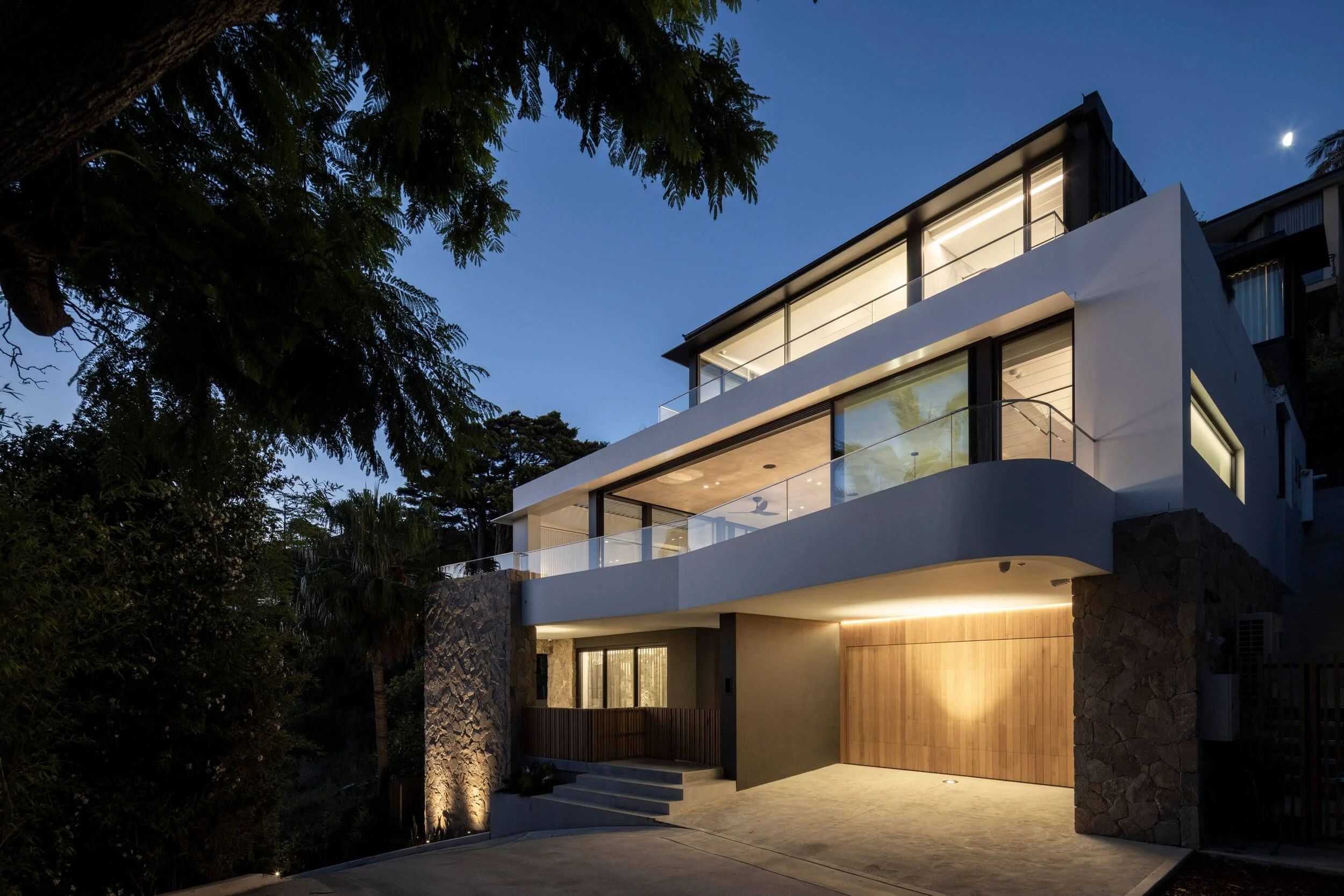
Lighting is the difference between a house that photographs well and a house that feels alive after dark. So it is worth knowing what a lighting designer actually costs, and what you get for it.
Key Takeaways
Lighting design for a high-end Sydney home is priced per project, not off a fixed menu.
The main design phases vary between $10,000 and $25,000, with lighting supply from $80,000 to $250,000.
Rooms, controls, gardens and renovation constraints are the biggest things that push the price up.
A five-phase process takes you from concept through to lights aimed after dark.
Working with an independent consultant means the right fittings at the best price, with industry discounts passed on.
Bringing a lighting designer in early avoids the rework and retrofitting that quietly cost you later.
How the fees actually work
We calculate our fees on a per project basis. The projects are very top-end and each one varies depending on the architect and interior designer on board.
A home might be predominantly decorative lighting with minimal architectural lighting, or it might be heavy architectural lighting, which requires a high level of detailing for LED strip, in-ground lights, and plaster-set lights. We need to know this before we can finalise the price.
The houses we tend to price for have cellars, gyms, pools and many other rooms. So the fixed price phases, Concept and Documentation, vary between $10,000 and $25,000 for the fixed fee component.
The construction phase is priced at hourly rates. During construction, there are documentation updates and site visits, and neither can be accurately predicted at the outset, so they are charged hourly.
The biggest components are the client's input and the challenges on site. If a client has many outstanding design choices before construction starts, then a lot more changes and decisions get made along the way, which means more documentation updates and more site visits. If everything is decided before construction starts, there is minimal change, few updates and a reduced number of site visits, down to around three for the whole construction phase.
The more decisions you lock in early, the less the construction phase costs you.
What drives the cost up or down
The number of rooms in a house definitely increases the fee. This is not a project home with four downlights or one pendant per room. For us, each room has its own personality and purpose, so more rooms means more design and specification for the build.
Lighting controls and automation add time too, with circuiting, switch locations, programming scenes and scene setting all to work through.
The size of the exterior garden matters as well. A lot of renovations have smaller gardens that do not take much time. High-end projects often have multiple gardens, steps, hard-surface areas, pergolas, pool houses and pool areas, all adding to the design time. New builds tend to be bigger, so they take longer again.
Renovations are the sleeper. An apartment or house being renovated and added to can take far more time than clients realise, because you are working around existing building constraints. Ceiling depths, wall cavities, accessibility and switchability all have to be resolved, and none of that is faced on a new build.
More rooms, more controls and bigger gardens all point the same way: more time, higher fee.
What you get for the fee
Our offering runs across five phases, and each one delivers something different.
Concept phase
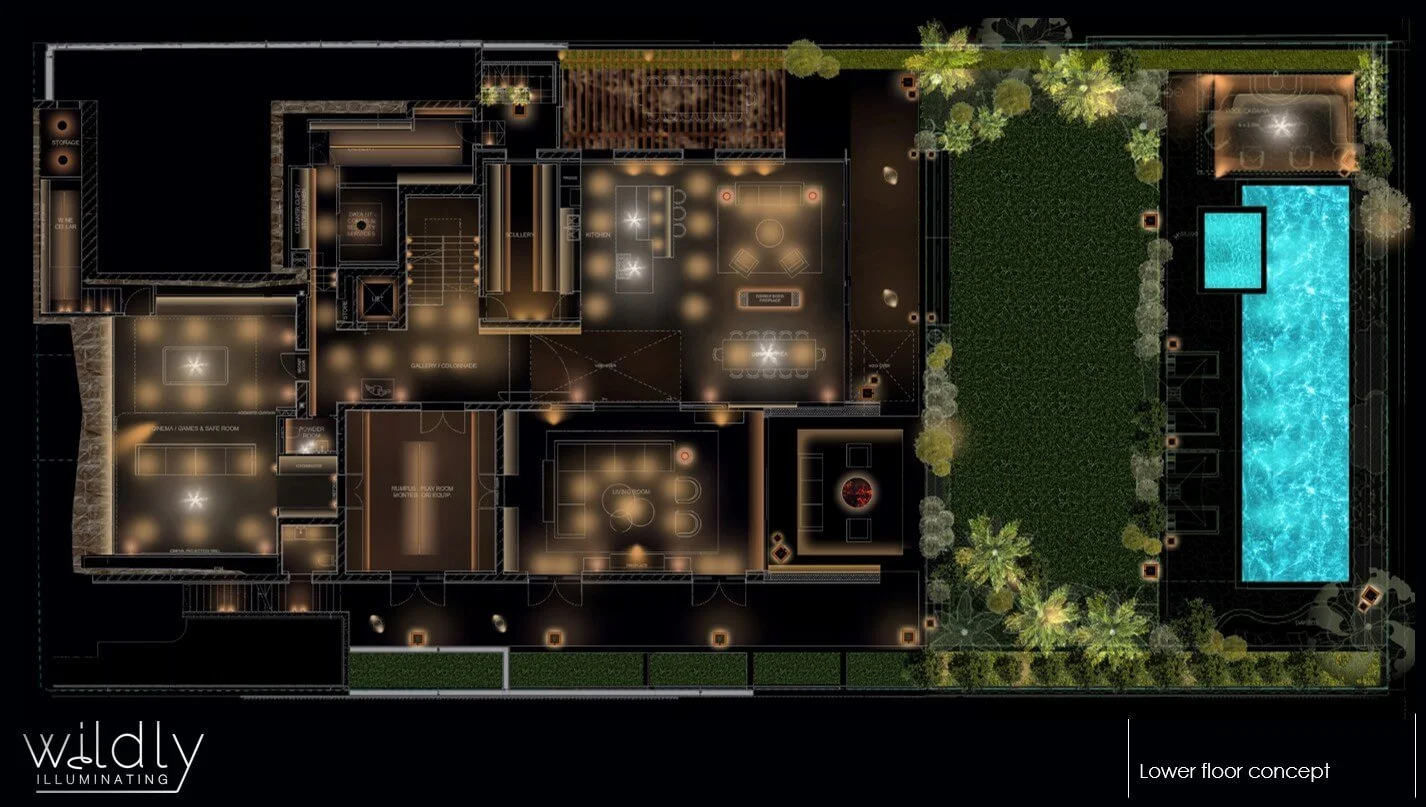
We start with a design meeting with you and the design team, including the interior designer and architect. We then come back with a glow plan, an inverse lighting plan on a black backdrop with all the lights located, plus mood images showing the key lighting effects. After the presentation you have a real sense of how the house will look and feel, along with a preliminary budget guide with an A and B option for the fittings. This is where the design is formed and the budget is set.
Documentation phase
This is where the design is documented in detail, so wiring, purchasing and installing are all accurate. You receive full reflected ceiling plans dimensioned for easy installation, lighting elevations, a lighting schedule with budget, and installation details.
Procurement phase
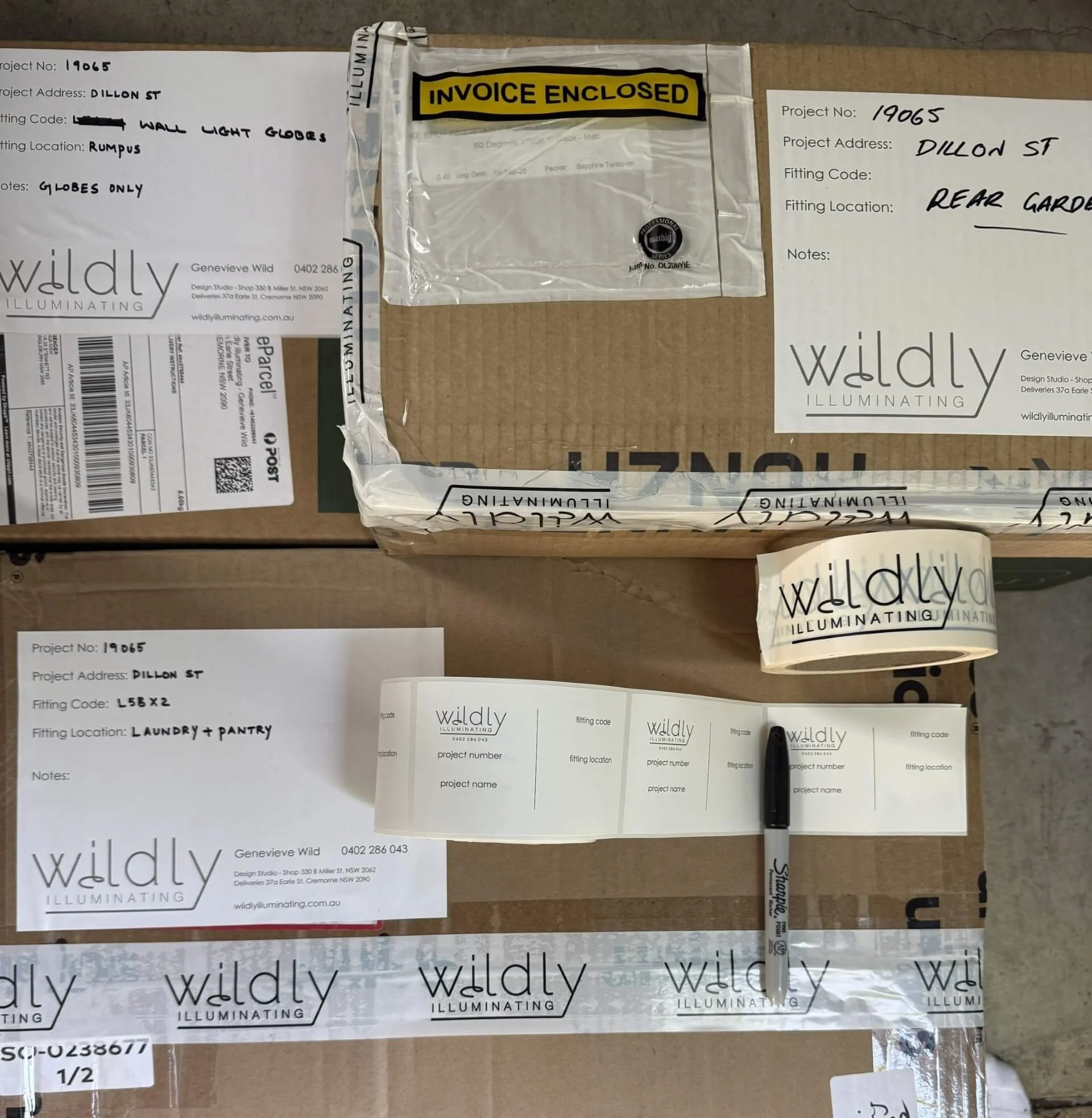
This is where lights are purchased accurately, for the best price, then stored, insured, checked and labelled to match the plans and schedule.
Construction phase
This is where site challenges and opportunities are captured early and resolved for the best outcome.
Commissioning phase
This is where adjustable lights inside and in the garden are aimed after dark, to light art, plants and features as designed. The lighting control scenes are set to suit the rooms, the time of day and your requirements.
Five phases, one thread: nothing left to chance on site.
Why working with an independent consultant saves you money
As an independent lighting design studio, we are free to specify lights from the suppliers of our choice. For you, that means the best fittings on design, technology, price and after-sales service.
Our flat percentage fee for procurement covers attaining the supplier pro forma, chasing lead times, receiving and checking fittings for damage, labelling them to match the schedule and plans, and providing insured storage until they are needed on site. You get that full service for the equivalent of retail pricing.
We once had a client buy their own choice of lights without knowing the driver detail to check for. The wiring on site did not match what the fitting needed, and fixing it cost hundreds of dollars.
Independence means the right fittings at the right price, not the ones someone needs to sell.
The truth about free lighting plans
Free lighting design is offered by suppliers, but there is nothing free about it. Every business is about revenue, and they make their money from the lights you buy. The more lights they put on your plan, the more they make.
As independent designers, we can select across a range of suppliers and specify the minimal fittings of the ideal type for the design and the budget.
Architects and interior designers include the fee for lighting plans as standard. They will tell you the client pays for someone to do the lighting plan somewhere along the line, so why not have a lighting designer do it. Most people do not yet know lighting designers exist, but the moment they do, we are engaged.
A free plan is not free. You pay for it in the fittings you did not need.
What to budget for
As a broad steer, allow $10,000 to $25,000 for the main lighting design phases, and $80,000 to $250,000 for lighting supply.
These figures are for homes that will be valued at $8M to $25M on completion, so use them to work out roughly where your project sits.
The myth worth busting
Lighting sets the mood, the feel and the elevation of a property. Get it wrong, by leaving it to the end, handing it to the electrician, or doing it yourself, and the property is actually worth less on completion.
Lighting is the icing on the cake. And no one likes a dusting of icing sugar when you could have strawberries, cream and chocolate shavings.
Good lighting lifts the value of the home. Bad lighting quietly lowers it.
If you are weighing this up for a build or renovation, it is worth a conversation about the service best suited to your project and budget. You can explore that here: Lighting Design Consultation
Call us to discuss the service best suited for your project and budget.
-
It is a fair question, but a well-considered lighting design often pays for itself. Because we are independent, we specify the right fittings for your budget without brand bias, and we pass on industry discounts on those fittings. Just as importantly, planning your lighting early avoids the costly rework, retrofitting and mistakes that surface when it is left to the end. You are not adding a line item, you are protecting the investment you have made in the rest of your home.
-
As early as possible, ideally during the design stage alongside your architect and interior designer. Early involvement means power points, fittings and control systems are integrated seamlessly into the build rather than worked around later. It is the single easiest way to keep both the design and the cost on track.
