
what are the roles of a lighting designer?
Most people meet a lighting designer for the first time halfway through a build, and their first thought is that we are the people who pick the pretty fittings.
Then they watch us talk drivers with the electrician, redraw a ceiling around a furring channel, and set scenes on a switch after dark, and the penny drops.
There is a lot more to the role than choosing lights. So here is what a lighting designer actually does, from the first design meeting to the moment you flick a switch and the room feels exactly right.

Key Takeaways
A lighting designer specifies the best lighting for your tasks, mood and aesthetic, within your budget.
The role runs across five phases, from concept through to commissioning after dark.
We are the conduit between the client, designers, architect, builder, electrician and automator.
The job is equal parts art and science, from mood and layering to glare, colour and controls.
Being an independent consultant means specifying the best fittings for you, not for a single brand.
Done well, the role is felt, not seen: a home that is seamless to control and lovely at every time of day.
What a lighting designer actually does
A lighting designer specifies the best lighting design for your task needs, mood preferences and design aesthetics, while meeting your desired budget, coordinating a successful installation on site, and commissioning the end result to achieve the design intended.
That is the short version. The longer version is about everything that has to happen for those lights to look effortless on the day you move in.
The role is not choosing fittings. It is making sure the whole home lights the way it was designed to.
Who a lighting designer works with
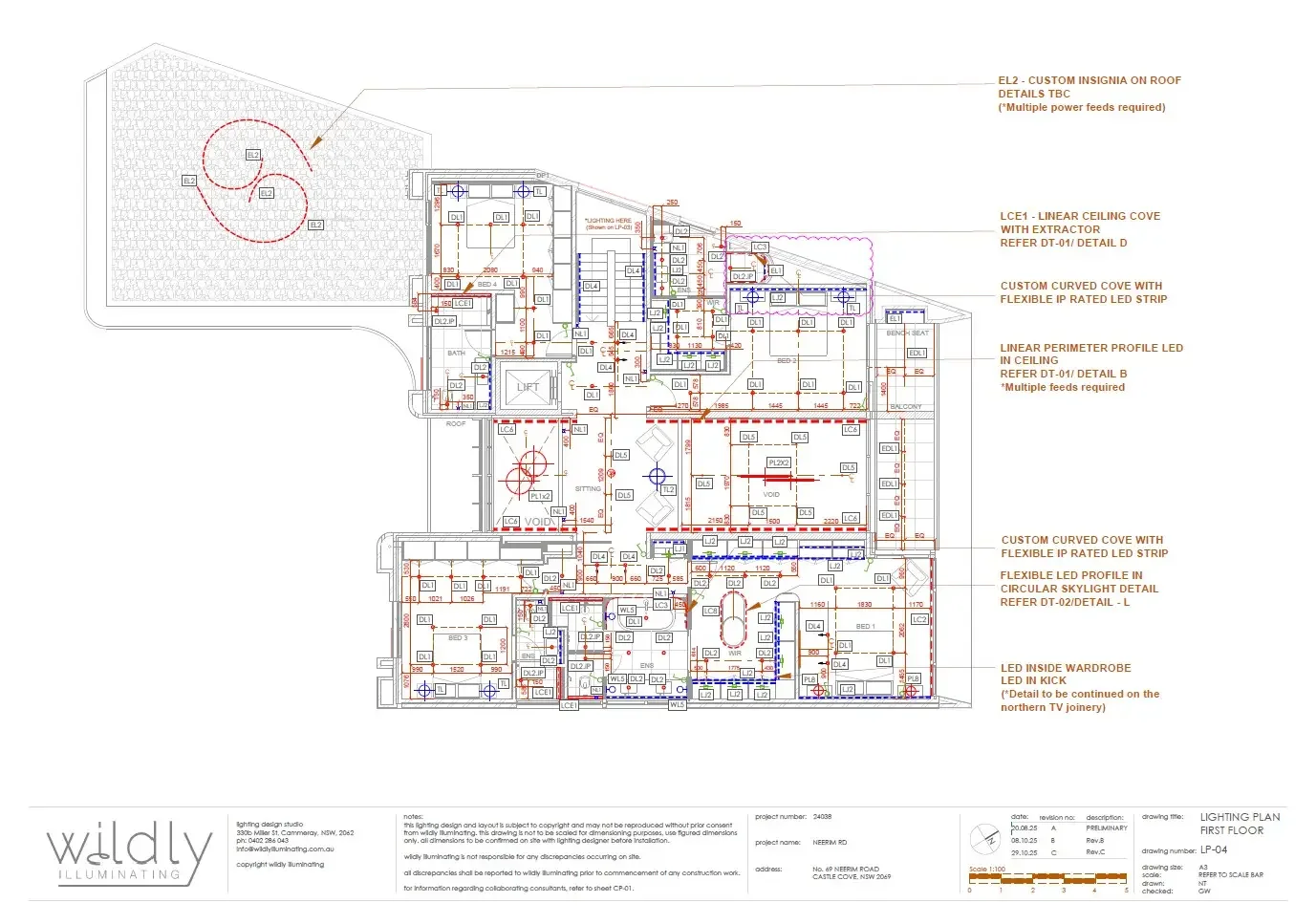
We work with the design team, the architect and interior designers, to make sure our drawings and theirs merge cleanly and do not double up.
We run through the fittings and their installation challenges with the electrician and builder, so the install goes smoothly. We coordinate with the automation contractor to make sure the correct control componentry is specified, and we supply the detail of the scenes on each switch for pre-programming, along with the dimming levels in each scene.
In short, we are the conduit between the client, the designer, the architect, the landscape architect, the builder, the electrician and the automator.
We sit in the middle of every trade, so the lighting does not fall through the gaps between them.
The art and the science of light
Often we are asked to design and specify the architectural lighting while the interior designers select the decorative lighting. On some projects we take charge of all the lighting. Either way, our technical side supports the designers in their decorative selections.
We look at the CCT and CRI to make sure all the finishes render beautifully when the lights are on. We check the lux levels to see whether task surfaces will have enough light. We specify drivers for the LED lights to eliminate flickering.
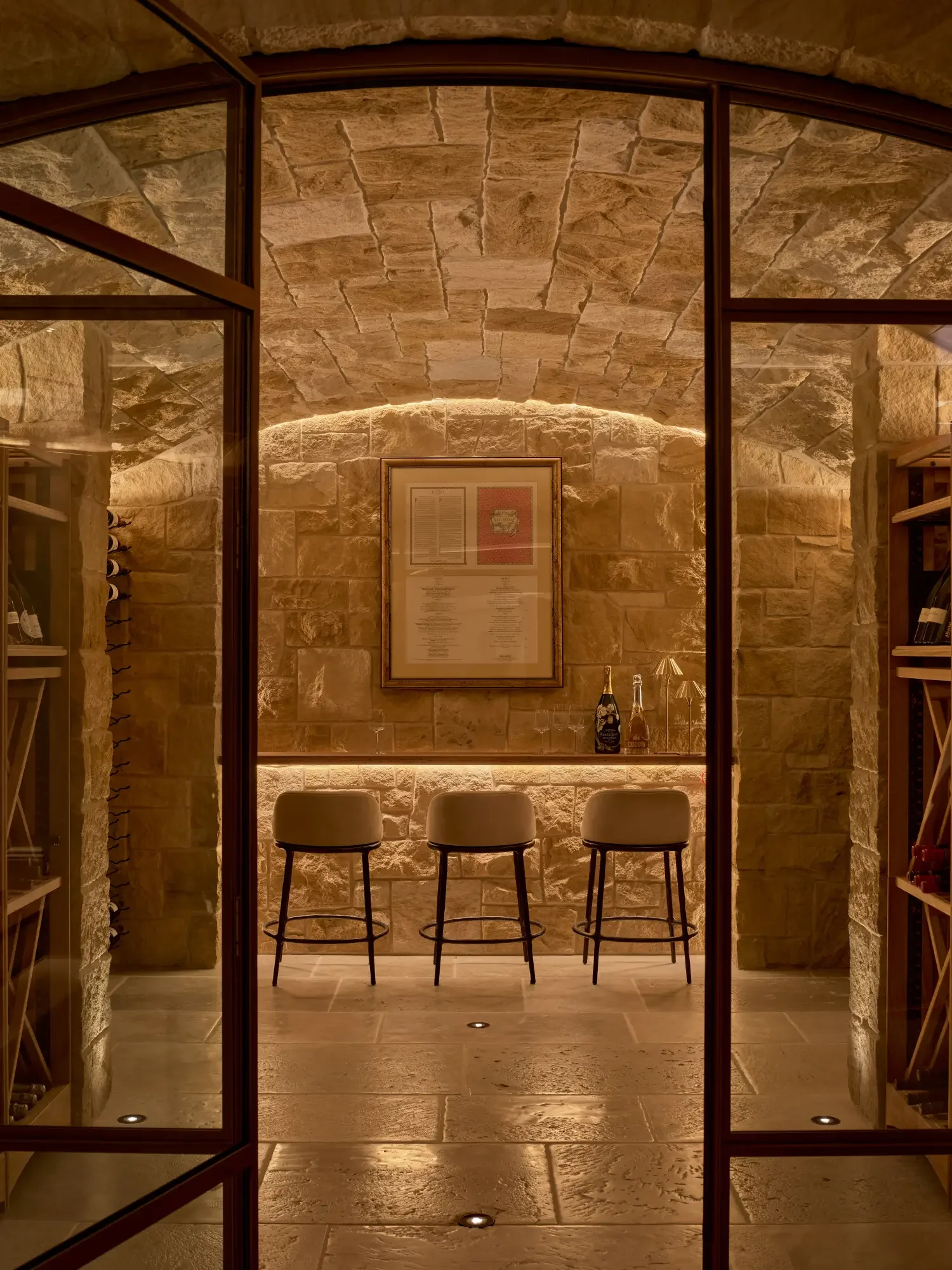
And always, we advocate for minimising glare. Architectural lighting should be concealed, so you see the surface or object being lit, not the fitting itself.
You are meant to notice the light, not the fitting.
The behind-the-scenes work you never see
A large part of the role happens where the client never sees it.
There is constant back and forth with the architect and interior designer, making sure we have the latest drawings and that lighting is considered alongside any design changes.
There is back and forth with the electrician on installation detail, wiring and control details. And when timbers, furring channel and the like force a design change, we look at the options to still achieve the intended outcome.
By the time you see the lighting, the hard part is already handled.
Why independence matters to your role
Not being tied to a brand lets us specify the best fittings for the design, the budget and the after-sales service.
A client buying from a shop is getting biased advice, and lighting suppliers have rarely studied lighting formally. Our independence means the recommendation is about your home, not about moving stock.
When we are not tied to a brand, our only loyalty is to your project.
The part of the role people underestimate
Mostly, people misunderstand the complexity of lighting.
The challenges with LEDs are smooth dimming, counteracting flicker, good colour quality, the spread of light and the output quantity of light. Electricians, architects and interior designers are generally not well versed in these specifics, and that is exactly the gap the role fills.
Lighting looks simple when it is done right. That is the whole point of the job.
The role on site
The role does not end when the design is done.
During construction, we ideally visit site at the start to run through the details for any lights set into the concrete slabs, and to discuss fittings going into bricks, gyprock and the like. A rough-in walk-through with the electrician makes sure mounting heights and ceiling locations are optimal. We are also available by phone for RFIs from site.
Then comes commissioning, where adjustable lights are aimed after dark and the control scenes are set, so the home performs exactly as designed.
The design only becomes real once it is aimed and set on site.
Does the role change by project type
Our role as designer and technical expert stays similar across all areas of a project, inside and out, heritage and new build, wellness and passive house.
We are well experienced and educated across all of these, so the depth of the role does not drop away just because the project changes shape.
Different homes, same role: get the light right, whatever the brief.
What it feels like when the role is done well
The result is a home that is seamless to control and switch, with lighting levels and layers that optimise the experience at every time of day.
It feels welcoming, cosy, relaxing, elevated, often luxurious, and it is always functional. Most clients cannot name exactly what we did, and that is usually the sign it worked.
When the role is done well, you feel it every day, even if you cannot name it.
If you are planning a build or renovation and want to understand where a lighting designer fits into your team, it is worth a conversation. You can start here:
work with us on your next project.
-
They are complementary roles. An architect shapes the building and an interior designer composes the space, its materials, furnishings and form, while we focus purely on how light interacts with all of it. We work alongside both, making sure the lighting supports their design intent rather than competing with it. Because we understand construction as well as aesthetics, we bridge the gap between the design vision and the technical execution needed to achieve it.
-
Yes, the roles are different. An electrician installs and wires your lighting safely and to code, which is essential work. A lighting designer decides what should be installed, where and why: the layout, the fittings, the layering of light and the controls that bring it all together. We provide the documentation and on-site guidance so your electrician can deliver the design exactly as intended. The two work best hand in hand.
